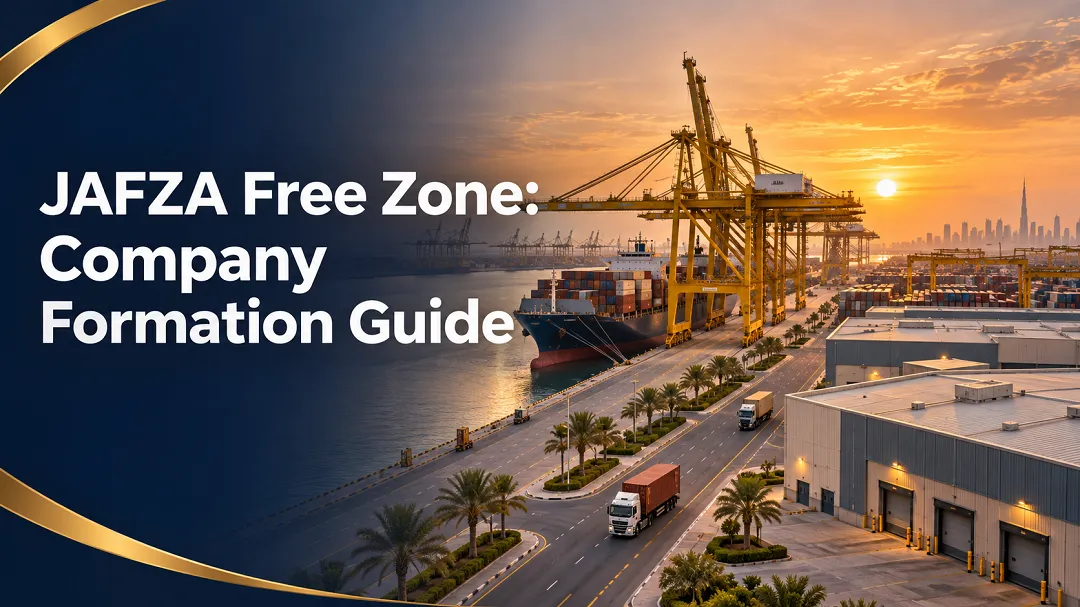
The JAFZA free zone, also known as Jebel Ali Free Zone, is one of Dubai’s major business and logistics hubs. Located near Jebel Ali Port, it supports companies involved in international trading, manufacturing, warehousing, distribution and logistics. Its location and range of business facilities make it an option for international investors looking to establish operations in the UAE.
However, choosing JAFZA involves more than registering a company. Investors need to select the right legal structure, business activity, licence and facility while understanding the associated costs and compliance requirements. This guide explains JAFZA free zone companies, company formation, licence types, documents, taxation and other important considerations.
What Is JAFZA Free Zone in Dubai?
JAFZA stands for Jebel Ali Free Zone. It is a business and industrial free zone in Dubai, operated by DP World, with infrastructure designed to support international trade and commercial activities.
Its location near Jebel Ali Port makes it particularly relevant to importers, exporters, manufacturers and logistics providers. Businesses can access offices, warehouses, industrial units, land and other facilities according to their operational needs.
Unlike free zones primarily focused on professional services or technology, JAFZA has a strong connection with physical goods, supply chains and international distribution.
What Types of JAFZA Free Zone Companies Can You Establish?
The appropriate company structure depends on the number of shareholders, ownership arrangement and business objectives. JAFZA provides five main formation options.
Free Zone Establishment (FZE)
A JAFZA FZE company is a limited liability entity with one shareholder. The shareholder may be an individual or a corporate entity. It is suitable for entrepreneurs and businesses seeking a separate legal entity with single-shareholder ownership.
Free Zone Company (FZCO)
A JAFZA FZCO company allows multiple shareholders, who may be individuals or corporate entities. It can suit partnerships, joint ventures and businesses with more than one investor.
Public Listed Company (PLC)
A JAFZA PLC is a public company structure designed for offering shares to the public and listing on a stock exchange, subject to applicable market laws and regulatory requirements
Branch of a Company
An existing UAE or foreign company may establish a branch in JAFZA. A branch extends the parent company's operations rather than creating an independent subsidiary in the same way as an FZE or FZCO.
Offshore Company
JAFZA also offers offshore company formation through registered agents. This structure is intended for permitted offshore purposes and does not provide the same operating permissions as a regular JAFZA free zone company.
You can review the available structures on the official JAFZA company formation page.
Which Business Licences Are Available in JAFZA?
A business licence determines which activities a company is authorised to conduct. JAFZA offers four main licence categories.
JAFZA Trading Licence
A JAFZA trading licence allows a company to buy, sell, import, export and distribute approved physical goods specified on its licence. A general trading licence may cover a wider range of activities and product groups, subject to JAFZA's approval.
JAFZA Service Licence
A service licence is intended for businesses providing approved professional, technical or other services. The company must conduct only the activities authorised under its licence.
JAFZA Industrial Licence
A JAFZA industrial licence supports approved manufacturing, processing, assembly and production activities. Businesses may need suitable industrial premises and additional environmental or safety approvals.
JAFZA Logistics Licence
A JAFZA logistics licence covers approved activities such as warehousing, storage, transportation, distribution, freight forwarding and inventory management.
The correct licence depends on the actual business model, not simply the company's preferred description. Check the official JAFZA licence categories and requirements before selecting an activity.
What Are the Benefits of Setting Up a Company in JAFZA?
The advantages of JAFZA free zone are particularly relevant to businesses that depend on international trade and physical distribution.
- 100% foreign ownership: JAFZA allows 100% foreign ownership under its applicable company structures, subject to registration requirements and relevant regulatory approvals .
- Strategic port access: Proximity to Jebel Ali Port supports international shipping, importing and exporting.
- Logistics infrastructure: Companies can access warehouses, industrial units, offices and other commercial facilities.
- International trade opportunities: Businesses can import, export and re-export goods, subject to applicable customs and regulatory procedures.
- Business ecosystem: The zone serves companies across sectors such as automotive, electronics, FMCG, healthcare distribution, manufacturing and machinery.
JAFZA may be particularly suitable for businesses that need storage, distribution or industrial facilities. A small consultancy or freelancer with no requirement for these facilities should compare other UAE free zones before making a decision.
How Much Does JAFZA Free Zone Company Setup Cost?
According to JAFZA's published fee schedule, company registration for an FZE, FZCO or branch costs AED 5,000 (one-time). Annual licence fees start at AED 5,000 for trading, service and industrial licences, while general trading and logistics licences cost AED 15,000 annually. Therefore, basic registration and licence fees start at approximately AED 10,000, excluding facility rental, visas and other additional costs. The JAFZA free zone company setup cost depends on the company structure, licence category, selected activities, facility and visa requirements. There is no single price that applies to every business. The main cost components include:
| Cost component | What it covers |
|---|---|
| Company registration | Incorporation and registration charges |
| Licence fee | Annual licence based on the approved category and activities |
| Facility rental | Office, warehouse, industrial unit or other premises |
| Immigration | Establishment and visa-related charges |
| Documentation | Attestation and supporting documents, where applicable |
| Compliance | Accounting, audit and tax-related expenses |
For an accurate estimate, use the official JAFZA cost calculator. It considers factors such as licence type, activities, shareholders and company formation type. Confirm the final quotation directly with JAFZA before budgeting because fees and package conditions can change.
What Documents Are Required for JAFZA Company Formation?
The documents required for JAFZA company formation depend on the legal structure and whether the shareholders are individuals or corporate entities. Individual shareholders may be asked to provide:
- Passport copies and personal details.
- Residential and contact information.
- Shareholder and director details.
- Specimen signatures and relevant declarations.
Corporate shareholders may need additional documents, including:
- Certificate of incorporation or good standing.
- Memorandum and Articles of Association.
- Board resolution approving the JAFZA company formation.
- Details of directors, shareholders and authorised representatives.
- Power of attorney, where applicable.
JAFZA may also request a business plan, project summary, facility-related documents and an Environment, Health and Safety declaration for certain premises. Ultimate Beneficial Owner (UBO) information and KYC checks are also part of the registration process.
Review the current JAFZA registration rules and document requirements before submitting an application.
How to Set Up a Company in JAFZA: Step-by-Step Process
The JAFZA company formation process generally involves the following stages:
- Choose your business activity: Identify the products or services your company will provide and confirm that JAFZA permits the proposed activities.
- Select a legal structure: Decide whether an FZE, FZCO, PLC, branch or offshore company suits your ownership arrangement.
- Select a licence: Choose the relevant trading, service, industrial or logistics licence.
- Submit the application: Provide the required shareholder, director and company information for review.
- Complete KYC and approvals: Submit UBO declarations and any additional documents or approvals requested by the authority.
- Arrange your facility: Select an office, warehouse, industrial unit or other suitable premises, depending on your activity.
- Complete registration and payment: Sign the required documents, settle the applicable fees and complete the incorporation formalities.
- Receive your licence: Once the application is approved and requirements are fulfilled, JAFZA issues the relevant company and licensing documents.
JAFZA states that its company formation process can be completed through digital channels. However, the actual processing time depends on the application, document checks, facility arrangements and any additional approvals.
JAFZA Offices, Warehouses and Industrial Facilities
JAFZA offers different facilities to accommodate businesses with different operational needs. These include office space, co-working and workstations, warehouses, showrooms, retail outlets and industrial plots.
A trading company may need office and storage space, while a manufacturer could require an industrial unit or land. Logistics businesses may prioritise warehouse capacity and access to transport infrastructure.
Before leasing a facility, consider your stock volume, equipment, workforce, licence conditions and expected expansion. Facility selection can also affect visa allocation and overall setup costs.
JAFZA Visa Requirements for Investors and Employees
A registered JAFZA company may apply for investor or employee visas, subject to applicable immigration procedures and eligibility requirements.
The number of visas available is not necessarily the same for every company. It can depend on the selected facility, company arrangements and relevant approvals. Applicants may need to complete immigration formalities, medical fitness testing and Emirates ID procedures.
Confirm the available visa allocation and current charges with JAFZA before finalising your facility or business setup budget.
Corporate Tax and VAT Requirements for JAFZA Companies
Establishing a company in a free zone does not automatically exempt it from UAE taxes. JAFZA corporate tax benefits depend on meeting the Qualifying Free Zone Person (QFZP) conditions, including qualifying income, UAE substance and transfer pricing requirements.
Eligible businesses may benefit from a 0% rate on qualifying income, while non-qualifying income is subject to applicable corporate tax rates. Companies must also meet relevant corporate tax registration, filing, record-keeping and VAT obligations.
For accurate guidance, consult the Federal Tax Authority's Free Zone Person guidance and the UAE Ministry of Finance corporate tax information.
Can a JAFZA Company Trade in the UAE Mainland?
JAFZA companies can trade internationally, but selling goods in the UAE mainland may require customs clearance, applicable duties and additional regulatory approvals. Businesses may also need a licensed mainland distributor or relevant permissions.
The process can differ for goods and services, so businesses should check the applicable requirements before starting mainland sales. The UAE Government guide to running a business in a free zone explains the general rules and mainland trade considerations.
Is JAFZA the Right Free Zone for Your Business?
JAFZA can be a strong option for import-export companies, manufacturers, logistics providers, wholesalers and distributors that need access to port-linked infrastructure. Its warehouses, industrial facilities and international trade environment can support businesses handling physical products.
However, it may not be the most cost-effective option for every entrepreneur. Businesses providing remote professional services or operating without inventory may find other free zones more suitable. Compare licensing costs, facility requirements, visa needs and customer locations before choosing.
Conclusion
Choosing the right structure, licence and facility can make a significant difference to your setup costs and future compliance. MAK Chartered Accountants can help businesses assess their UAE setup requirements and understand accounting, corporate tax, VAT and ongoing compliance responsibilities.
Contact MAK Chartered Accountants to discuss your business plans and the requirements for establishing a company in JAFZA.
Official links
Need help with free zone formation?
Share your requirements with MAK and discuss the next steps for your business.
Talk to MAK